

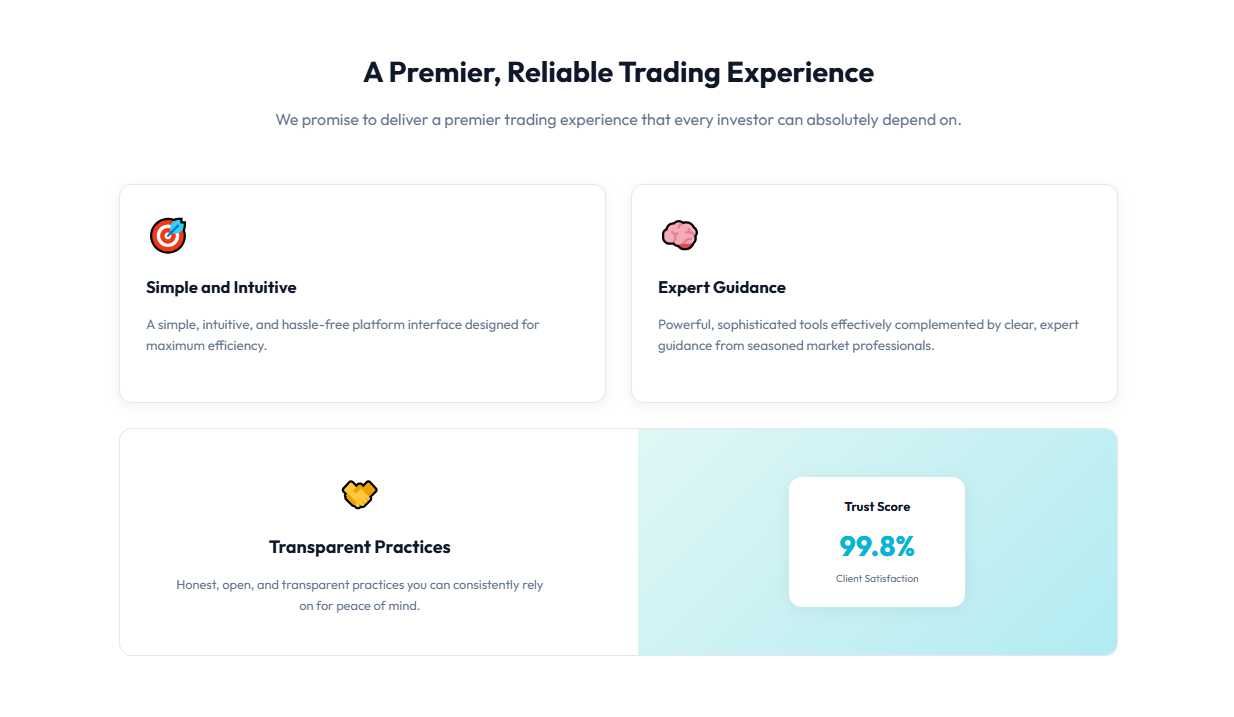
Some platforms lean on flashy claims. Others let their actual structure do the talking. This Kixy-LTD.com Review leans into the second approach and looks at what’s actually built into the platform.
Kixy offers a tiered account system, a set of strategy tools, and a fairly wide range of markets to trade. Together, those pieces say more about how the platform was designed than any single tagline could.
A trading platform that scales properly tends to show it through structure, not slogans. This review walks through the account tiers, the calendar and strategy tools sitting behind them, and the overall market range on offer.
How Is a Trading Account Actually Structured?
An account on this platform isn’t a single fixed offering. It scales across several tiers, each one building on the last with more reporting and more direct contact.
A key point in this Kixy-LTD.com Review is that every tier includes access to educational material through the platform’s academy. That baseline stays consistent, even as the higher tiers add extra layers on top.
Portfolio reporting also runs through every tier, though the frequency changes as accounts move up. That gives traders a fairly predictable sense of what to expect before committing to a particular level.
What Comes With an Entry-Level Account?
An entry-level account still gets weekly market reviews and a dedicated account manager. That’s a reasonable starting point for someone still getting familiar with how markets move.
Weekly portfolio reports round out the basics. A trader at this stage has enough information to track progress without being overwhelmed by daily updates they might not need yet.
What Changes at the Higher Tiers?
Higher tiers add personal portfolio management and more frequent analyst sessions. This found that the jump between tiers tends to focus on access rather than just extra perks.
Daily analyst sessions, live webinars, and custom education material all show up further up the ladder. Account monitoring also becomes more frequent, moving toward continuous oversight at the higher levels.
That kind of scaling makes sense from a structural standpoint. It suggests the tiers were built around what different traders actually need, rather than just adding cosmetic labels to the same experience.
How Does the Economic Calendar Support Trading Decisions?
Beyond account tiers, the platform also builds in tools meant to help traders track events that move markets. This Kixy-LTD.com Review takes a closer look at how the economic calendar fits into that picture.
The calendar consolidates data from multiple sources and organises it by how much it might shift market conditions. Traders can set up notifications tied to specific price movements or events relevant to their own positions.
The dashboard itself can be adjusted too, so a trader sees the data channels that matter most to their own strategy. That’s a fairly practical touch, since not every trader cares about the same set of indicators.
One thing to note in this is how the calendar frames different types of data. Indicators like manufacturing activity and central bank announcements get treated as signals that often lead broader market shifts, rather than just static numbers on a page.
That framing gives traders more context than a plain list of dates and figures. It turns the calendar into something closer to a planning tool, rather than just a reminder service.
What Is the Approach Behind the Market Gap Strategy?
This review also looked into the platform’s Market Gap Strategy, which focuses on the handoff points between major trading sessions around the world. That’s the window where pricing gaps tend to show up most.
The strategy is built to flag pricing discontinuities during these session overlaps. Traders following it get structured briefings that lay out specific entry points and risk parameters, rather than vague suggestions.
An interesting observation here is that the approach ties entry signals to measurable market drivers, such as liquidity shifts or scheduled economic releases. That keeps the strategy grounded in data rather than guesswork.
Senior analyst sessions are also part of this offering, giving traders a chance to talk through their approach directly with someone experienced. That kind of access adds a human layer to what would otherwise be a purely technical tool.
How Does Cross-Market Execution Technology Work?
Execution speed matters just as much as strategy design, and this section of the Kixy-LTD.com Review focuses on how orders actually get filled across different markets. The platform’s execution technology is built to respond to pricing differences across multiple venues at once.
Here’s a short rundown of what that technology covers in practice:
- Fast order fulfilment designed to reduce the gap between a trade signal and the actual fill
- Coverage spanning several asset types, including currencies, shares, and commodities, all processed through one system
- Ongoing reconciliation that corrects pricing discrepancies without requiring manual input from the trader
Taken together, these pieces point to a system built for consistency across markets, rather than one optimised for a single asset type. That consistency matters most during periods of higher volatility, when execution speed tends to count for more.
This Kixy-LTD.com Review also noted that the underlying design aims for a balanced exposure profile. Rather than betting heavily in one direction, the execution technology is structured to smooth out some of the wider swings a trader might otherwise feel.
What Range of Markets Can Traders Access?
A platform’s legitimacy often shows through the breadth of what it actually offers, not just how it markets a handful of headline assets. This Kixy-LTD.com Review found a fairly wide spread across several asset categories.
Here’s a general breakdown of what’s available across the platform:
- Foreign exchange pairs spanning major, minor, and exotic currency combinations
- Digital assets, including established cryptocurrencies alongside other tier-one tokens
- Precious metals, with gold commonly used as a hedge during uncertain periods
- Global indices, covering major benchmarks from several regions
- Commodities, including energy and raw materials tied to broader economic cycles
- Equities, covering shares across a range of listed companies
That range gives traders room to diversify across asset types instead of being locked into a narrow set of instruments. A platform built around one or two markets tends to leave traders more exposed to conditions in that specific space.
Spreading access across several categories also reflects a more considered approach to platform design. It suggests the structure was built with different trading styles in mind, rather than a single narrow use case.
How Are Capital Growth Plans Structured?
The platform also offers structured plans aimed at longer-term capital growth, built around compounding returns over time. This Kixy-LTD.com Review found that these plans emphasise consistency over short-term speculation.
Traders retain access to their deposited funds throughout, without being locked into fixed retention periods. That flexibility gives people room to adjust their approach as circumstances change, rather than committing blindly to a rigid structure.

Kixy-LTD.com Review: Frequently Asked Questions
Does the platform offer more than one account tier? Yes, accounts scale across several tiers, each adding more reporting frequency and analyst access as they go up.
What kind of markets can traders access? Traders can access foreign exchange, digital assets, metals, indices, commodities, and equities across one interface.
Does the platform include tools for tracking economic events? Yes, an economic calendar consolidates data and lets traders customise alerts around specific events or price movements.
Is there support for longer-term investment approaches? Yes, structured capital growth plans are available, built around consistent compounding rather than short-term speculation.
Bottom Line
This Kixy-LTD.com Review looked past the surface-level pitch and focused on how the platform is actually structured. Tiered accounts scale sensibly, the economic calendar adds real context to market data, and the Market Gap Strategy ties entry signals to measurable drivers.
Execution technology spans multiple asset types with a focus on consistency, and the overall market range gives traders room to diversify rather than narrowing them into one or two instruments. Capital growth plans round things out with a longer-term, flexible option.
None of these features stand out as a single dramatic selling point. Together, they suggest a platform built around genuine structure, which tends to say more than any headline claim ever could.