

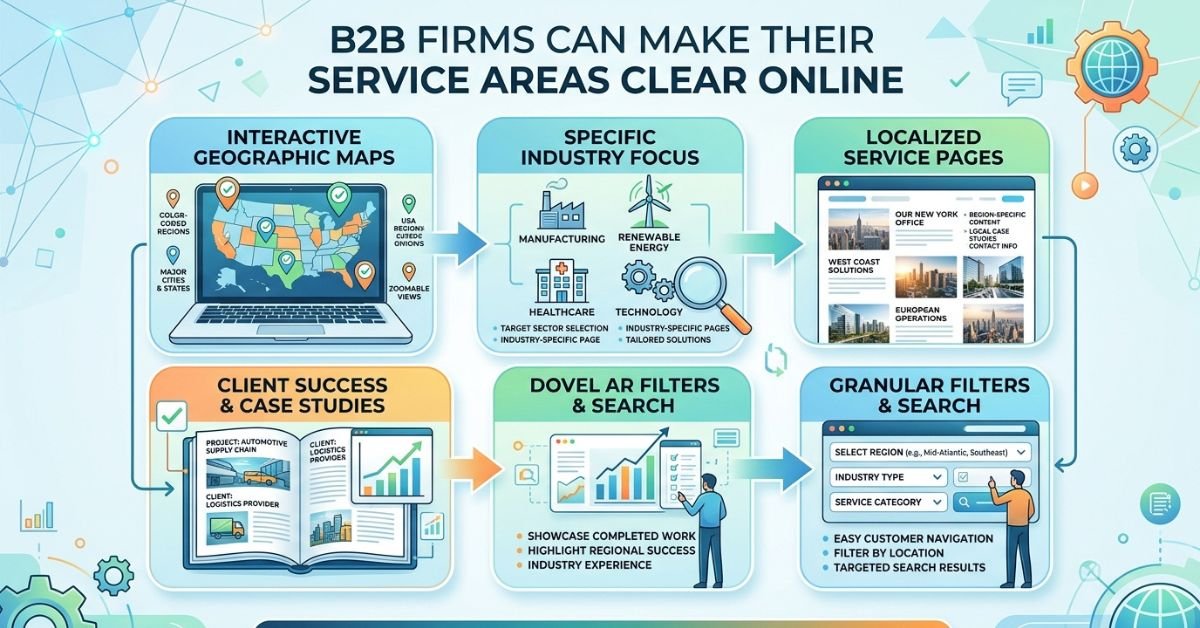
Service coverage seems like a simple fact, but many B2B websites communicate it poorly. A company may list a head office, mention national support and publish dozens of town pages without explaining where teams operate or which services are available in each area. Buyers are left to guess whether the supplier can help.
State the Operational Reality
Start with how the business delivers. Does it send engineers from regional bases, supply products across the UK or limit emergency support to a defined radius? The website should describe the real model in plain language.
This protects both visibility and lead quality. A broad national claim may attract searches, but it creates wasted enquiries if the service cannot be delivered economically. Accurate coverage gives sales teams better-fit conversations and helps customers make an early decision.
Put Coverage Near the Service
A contact page is not enough. Someone arriving on a maintenance, installation or consultancy page should be able to confirm availability without leaving the buying journey. Add a concise coverage statement beside the service details and call to action.
Where availability differs by service, say so. Product delivery may be national while on-site support is regional. Treating both as the same can create confusion that only appears after a prospect has invested time in an enquiry.
Use Location Pages Selectively
A location page should answer a local commercial question. It may explain the services available from a branch, introduce the team, show nearby work and provide relevant contact information. These details give the page a reason to exist beyond replacing one place name with another.
Before creating a location page, a specialist firm should check search demand, operational coverage and the evidence it can provide for that area.
Keep Business Details Consistent
Addresses, telephone numbers and opening details should agree across the website, business profiles and trusted directories. Inconsistency makes it harder for buyers to know which information is current. It can also weaken the signals that support local search visibility.
Multi-location firms need a clear record for each branch. The local search approach set out at seoyolo.com favours accurate branch and coverage information over invented offices. Use the correct local number and address where customers can deal with the business, and explain when an area is served remotely or through a mobile team.
Support Claims With Local Evidence
Local case studies can show that a service-area claim reflects real work. A short example identifying the problem, solution and type of site is more useful than a generic statement about regional experience. Reviews may add further reassurance when they mention the service and area naturally.
Evidence should be relevant and proportionate. One case study can support several related pages through internal links, provided each page still contains enough unique information for its audience. Repeating the same paragraph across a location set adds no value.
Keep Coverage Changes Under Control
Service areas change when branches open, engineers move or delivery arrangements improve. Websites often lag behind those decisions. One page gets updated while old location copy, footers and directory listings continue to make a different promise.
Checking every mention by hand isn’t necessary. Keep a simple source of truth for branches, phone numbers and coverage rules, then review the pages and profiles that reuse those details. Assign an owner so operational changes reach the website before they create poor-fit enquiries, because old claims carry a cost.
A prospect who is told after submitting that their site isn’t covered has wasted time and may not return. The sales team has also handled a lead it could never serve. Accurate local information protects trust before the first conversation starts.
Give Buyers an Easy Way to Check
Even a clear coverage page cannot answer every boundary question. Provide a direct route for buyers to confirm availability, especially for urgent or site-dependent services. The call to action can ask for a postcode and brief service need rather than a long project description.
Good coverage information removes a basic source of doubt. It tells prospects where the business works, shows that the claim is credible and makes the next step simple. For specialist B2B firms, that clarity can be the difference between a qualified enquiry and a quick return to search.