

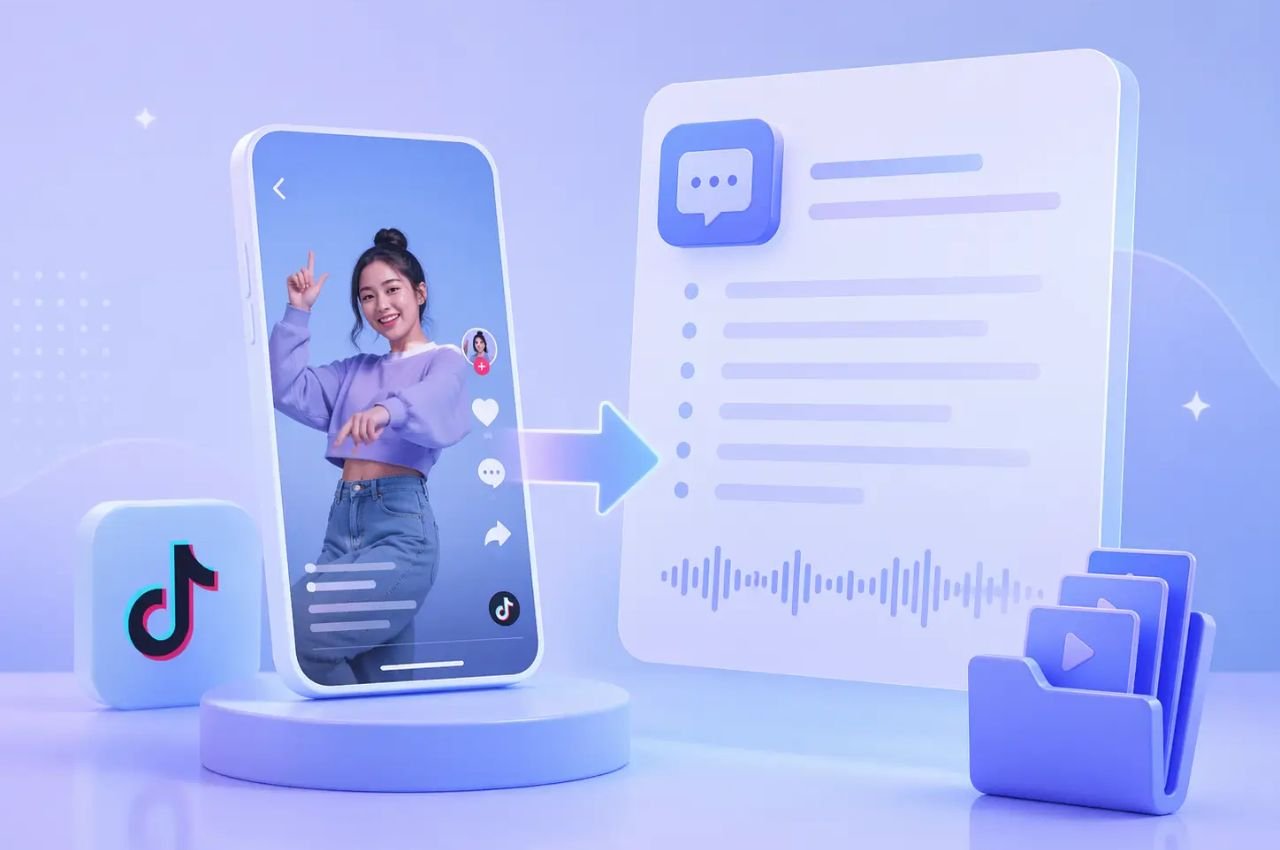
Short videos are spreading fast across the internet, changing how people take in facts and ideas. On apps such as TikTok, countless clips offer lessons, business tips, or fun moments. Yet having so many moving images to sort through brings its own problem – there just isn’t enough time. Sitting through heaps of brief films just to catch one useful point? That takes up far too much energy.
One way to tackle this issue is through new tech powered by artificial intelligence – like a tool that turns TikTok audio into written words. These systems work hand in hand, changing how people who make videos, study media, or just watch clips handle fast-moving content. Instead of listening to entire recordings, users get clear text versions plus shortened overviews that capture key points quickly. Efficiency jumps when speech becomes searchable documents while long videos shrink into compact highlights without losing meaning.
The Rise of Quick Video Watching
Back when social media first took off, posts were mostly words and pictures. Then came TikTok, pushing short videos shot vertically into the spotlight. These clips grab attention quickly but don’t show up in text searches like regular articles do. Say someone hears an interesting number during a ten-minute clip – there’s no way to jump straight to that part without dragging the progress bar inch by inch.
Because of this shortcoming, people started needing fast ways to turn speech into written form. Spoken content on platforms like TikTok gets turned into text quickly using smart voice recognition systems. Once captured, that written version moves through powerful language models which pull out main points along with essential ideas and clear conclusions. With these tools working together, watching videos feels more like reading useful notes almost instantly.
What A TikTok Transcript Generator Is?
From a TikTok transcript generator video, sound gets pulled out by certain programs made just for this job. What comes next? That audio turns into words you can read. Smart systems inside them handle how people really talk – thick accents, regional sayings, even internet lingo. Such patterns pop up everywhere online, especially where young users chat and share clips.
Modern transcription tools include voice recognition speed accuracy support for multiple languages and integration with other software
- Exactly when words show up matters. Good tools make sure each line matches its real moment in the video. Jumping straight to a spoken phrase becomes possible because of this link between text and time.
- Spoken words travel far when machines understand them. A good tool catches speech in many tongues, sometimes turning it into another language on the fly. Not every system does this well, but the best ones keep pace without stumbling.
- When more than one person talks – like in an interview or a back-and-forth debate – a smart system picks up who’s speaking when. It listens closely, then marks each part of the written text with the right name. Not everyone sounds the same, so the tech uses voice traits to tell them apart. Even if voices blend, it tracks shifts over time. What comes out is a clear record showing exactly who said what.
A single sound becomes words on a page when a transcript generator steps in. This shift lets information sit still instead of moving through time. Words appear where noise once lived, making it possible to jump around inside speech. Searching finds its footing here, within lines that stay put. Editing no longer chases echoes but works with something fixed. Analysis gains ground because patterns emerge more clearly in print. What was fleeting now holds form long enough to study.
The Strength of Artificial Intelligence in Video Summary
Reading every word from a video’s script might mean facing a wall of text, especially with lengthy or fast-moving TikTok clips. Yet here’s when something like an AI summary tool steps in – quietly useful. Instead of just repeating what was said, it picks apart sentences using smart language models. Important points rise; the rest fades – rambling bits, repeated phrases, sidetracks vanish without drama. What remains feels like the core, stripped down but clear.
How AI Summarization Works
- Looking at how words fit together helps the system understand what is really meant. Instead of matching exact terms, it focuses on overall sense. Meaning shifts based on surrounding phrases, which this approach captures. Context shapes interpretation more than isolated words ever could.
- Most of the time, it pulls out key lines already there. Sometimes it writes fresh ones that carry the main idea. A few methods help shrink long texts into short versions. One way grabs standout parts straight from the original. Another builds brief replacements using different words. Shortening happens either by selection or rephrasing. Key meaning stays clear no matter which route is taken.
- Out there, information gets broken down – no more walls of words. Think short lines that make sense at a glance. One idea per point keeps things clear. Sometimes it looks like a list, other times like quick takeaways up front. Time order shows up when sequence matters. Layout shifts depending on what helps most. Clarity wins every time through smart spacing and structure.
A single click can shrink minutes of screen time into half a minute spent scanning lines instead. One tool swaps lengthy play buttons for quick glances at condensed ideas. Watching becomes skimming, slowly building knowledge faster than before. Time once lost to playback now feeds understanding in small bursts. What took loops of rewinding now fits inside a breath.
How Different Fields Use New Tools
From students to professionals, folks tap into both transcription and summary features without needing extra steps. Tools that write down speech then shrink it help people move faster through daily tasks.
1. content creators digital marketers
Out here, making stuff never stops – yet flipping old clips into fresh posts keeps burnout at bay. Run a TikTok video through software that grabs every word, suddenly there it sits, ready to become something else entirely
- Engaging X (formerly Twitter) threads.
- Long articles show up now then. One deep dive after another appears online or lands in your inbox.
- Short lines made for video clips on social apps. Words that go under moving pictures online.
Some marketers turn to these tools when checking out rivals. When the leading TikTok clips in a field get boiled down, spotting popular angles becomes fast – no need to waste time browsing endlessly. Patterns pop up easier that way.
2. students and academic researchers
Out of nowhere, short clips on TikTok started teaching real things – history facts, science ideas, random finance tips. An AI Video Summarizer tool grabs those videos, pulls out only what matters, turns them into clear notes. Information slips neatly into one place, maybe Notion or something similar, where it stays ready to find later.
3. Professional Researchers and Journalists
Most words come out faster when they skip the replay button. Reporters watching viral moments grab full lines without rewatching clips over and over. Once spoken, those phrases land straight into stories – no more guessing pauses or half-heard claims. A clean version pops up ready to move forward. Time once lost now stacks behind facts instead.
The Hidden Mechanics Behind the Technology
Clicking once, getting it right every time – hidden beneath lies a web of smart systems working together. A single tap triggers layers of unseen machinery making sense of chaos quietly.
[TikTok URL/Video] ➔ [Audio Extraction] ➔ [ASR Engine (Transcript)] ➔ [LLM Processing] ➔ [Structured Summary]
- Out of the video file, sound gets pulled apart right away. What happens next is the audio track splits off completely. This separation lets the tool handle just the noise part. Instead of keeping everything together, it isolates the soundtrack neatly. With that done, the rest can be processed separately.
- Out of the sound comes words, once the system strips away hums, tunes, and echoes. Running through a tool like Whisper by OpenAI, what remains gets shaped into plain written form. Noise fades, voices stay. Text appears where speech used to live. Each step peels layers till only meaning shows.
- Starting off, Natural Language Processing takes plain text into an LLM. This system grasps what the user means, how they feel, along with the main points being made. After that, meaning gets pulled from words without needing exact phrasing. Sometimes it’s about guessing purpose, other times spotting emotion behind sentences. Through layers of analysis, messages turn into structured understanding. Not every detail matters – just enough to follow logic. In the end, machines respond based on inferred context rather than fixed rules.
- A fresh look emerges when layout guidelines take effect, shaping the result into something clear and organized just right for how it will appear. The end piece fits neatly where it needs to go, guided by invisible patterns that sort everything in place.
How Adding AI Tools Changes Work
Using these AI tools brings clear benefits
- Most of the time, watching a full video takes way too long. Yet here, one short moment gives you what matters most. A whole lot fits into less than sixty seconds. That shift changes how fast learning feels. Ten minutes of talking becomes something quicker to grab. Speed like this wasn’t common before. Now it sits right there, ready.
- When sound is not an option, words on a screen open doors. People who cannot hear rely on written versions of spoken content. Some simply find it easier to read than to listen. A silent viewer might absorb more through text. Those left out by audio gain entry when dialogue appears visually.
- Searchable text makes hunting down one word or thought across hours of videos happen in a blink. A single term pops up right away, no guessing where it might hide. Jumping through vast collections feels effortless when every spoken line turns into something you can track. Instant results change how you move through piles of footage. No more watching everything just to spot one moment.
- When words get lost, skipping straight to a written recap beats wrestling live speech full of noise. Speed jumps when you ditch sound clips for clean pages. Accuracy climbs without overlapping voices fighting in the ear. Written lines cut through clutter better than spoken ones tangled in echoes. A quiet paragraph outruns a shaky voice clip every time.
The Future of Interactive Video
One day soon, videos might feel more like conversations. Picture this: instead of just playing a clip, the screen listens. A question pops up – maybe about an ingredient mentioned halfway through – or who wrote that study shown briefly at minute two. These players could answer back, pulling facts straight from the audio or visuals. Instead of skimming paragraphs, people may simply wonder aloud and get replies. The line between looking something up and watching it unfold starts to fade. Something showed up around 1:34? Ask. Need steps listed in order? Just say so. Tools evolve without announcing it; they slip into how we already behave
Out here, where videos never stop rolling, pulling words from clips has changed how people keep up. One moment it’s sound and motion – next thing, everything sits still as readable lines. That switch? It flips watching into something sharper, more deliberate. Instead of just staring at screens, folks now grab meaning without getting lost in loops. Imagine catching every idea from a thirty-minute clip in under three sentences. For anyone trying to grow their work online or simply understand things quicker, this isn’t magic – just smarter handling of what already exists. Over time, reading summaries instead of rewinding footage becomes second nature. The noise doesn’t slow down, but moving through it does get easier.
Should you feel curious about working these tools into your routine, tell me whether you’d prefer a rundown of top platforms right now, a clear walkthrough for using each one, or a breakdown of how their technical APIs actually function.