

For many graduate students, the thesis is viewed as the final hurdle—a grueling marathon of research and citations required to cross the commencement stage. However, in the 2026 labor market, where skills-based hiring has overtaken prestige-based recruitment, the value of a master’s thesis has shifted. It is no longer just a bound volume collecting dust on a library shelf; it is a high-level demonstration of project management, data synthesis, and niche expertise.
When leveraged correctly, your research serves as a living portfolio that proves you can solve complex, real-world problems. This guide explores how to pivot your academic rigor into a competitive professional advantage.
The Shift Toward “Evidence-Based” Hiring
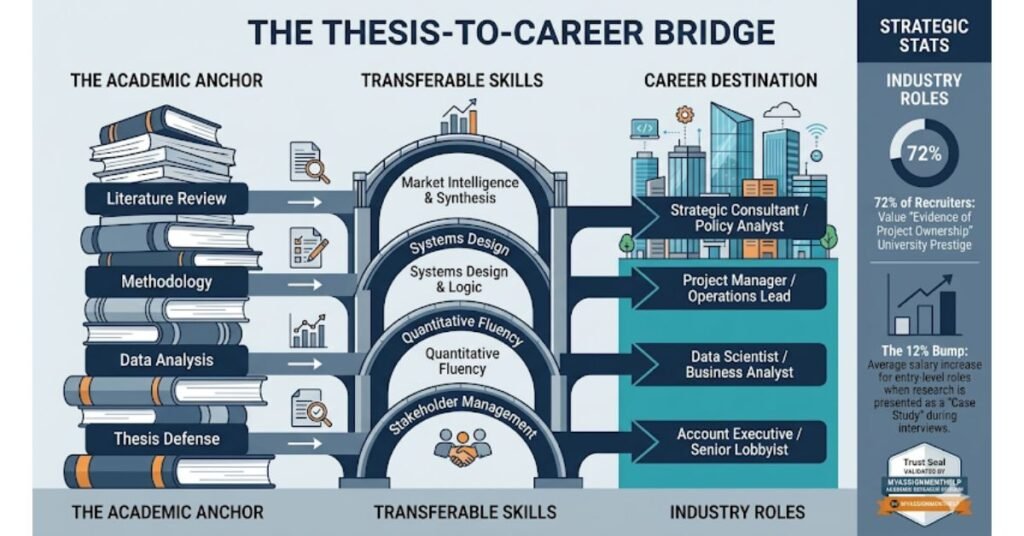
In recent years, hiring managers in the US have moved away from scanning for degrees alone. According to 2025 labor statistics, 72% of recruiters in tech and legal sectors prioritize “demonstrable technical literacy” over GPA. Your thesis is the ultimate “proof of work.” It signals to an employer that you possess the stamina to oversee a long-term project from conceptualization to defense—a trait highly sought after in senior consultancy and project management roles.
Navigating the complexities of high-level research often requires a collaborative approach. Many students seek master thesis help to ensure their methodology is statistically sound, which in turn makes the final product more defensible during a job interview. By treating your research as a professional white paper rather than a student assignment, you set the foundation for a career-ready personal brand.
Turning Research into Marketable Skills
To translate your thesis for a resume, you must break it down into the core competencies that industries crave.
1. Data Literacy and Analytical Rigor
Whether your thesis involved qualitative interviews or quantitative regression models, you have practiced high-level data handling. In a corporate environment, this translates to Market Intelligence or Business Analytics.
- The Bridge: Don’t just say you “wrote a thesis.” Say you “managed a 12-month data lifecycle project involving 500+ variables.”
2. Subject Matter Authority (The “Niche” Factor)
Your thesis makes you one of the world’s leading experts on a very specific sliver of knowledge. This is your “Unique Selling Proposition” (USP). If you wrote about sustainable supply chains in the Midwest, you are not just a business graduate; you are a specialist in green logistics.
Completing a thesis requires managing a “board of directors” (your committee), meeting strict deadlines, and pivoting when data fails. These are the exact requirements of a Senior Project Manager.
Professionalizing Your Academic Output
To make your thesis a “strongest asset,” it must exist outside of the university repository. Consider these three steps to professionalization:
Strategic Dissemination
Don’t let your findings stay in a PDF. Convert your chapters into:
- LinkedIn Articles: Break down your key findings into 500-word “industry insights.”
- White Papers: Reformat your literature review into a “State of the Industry” report for your target sector.
- Industry Presentations: Pitch your findings to relevant professional associations or webinars.
Ensuring Professional Integrity
Before sharing your work with potential employers or publishing it on professional platforms, it is vital to ensure the document is polished and meets the highest standards of integrity. Using a ppt plagiarism checker is a crucial step if you are converting your research into a visual presentation for a job interview. Employers value original thought, and any hint of academic oversight can jeopardize your professional reputation.
Data-Driven ROI: The Impact of Research on Salary
Recent studies on early-career professionals show that those who successfully “pitched” their thesis findings during the interview process secured starting salaries approximately 12% higher than those who did not. This “Expertise Premium” is particularly prevalent in fields like Data Science, Public Policy, and Bio-Engineering.
| Industry | Research-Backed Role | Average Salary Premium |
| Tech & AI | Research Scientist | 15% |
| Healthcare | Policy Analyst | 10% |
| Finance | Quantitative Analyst | 18% |
| Marketing | Consumer Insights Lead | 9% |
Key Takeaways for Career Integration
- Audit Your Skills: Map your thesis chapters to the “Required Skills” section of your dream job description.
- Optimize Your Resume: Use “Action Verbs” (e.g., Developed, Analyzed, Orchestrated) to describe your research process.
- Build a Portfolio: Host your thesis or its executive summary on a personal website or a professional portfolio site.
- Network with Your Bibliography: Reach out to the authors you cited in your research. They are your natural professional peers.
Conclusion: Beyond the Degree
Your thesis is more than a requirement; it is a professional credential. By shifting your mindset from “student” to “researcher,” you transform a thousand-page document into a powerful tool for career negotiation. In the competitive landscape of 2026, those who can bridge the gap between academic theory and industrial application will always lead the pack.
Frequently Asked Questions (FAQ)
Q1: Can I put my thesis on my resume if it isn’t published?
A: Absolutely. List it under “Education” or a dedicated “Research Experience” section. Include the title and 2–3 bullet points highlighting the methodology and the impact of your findings.
Q2: How do I talk about my thesis in an interview without sounding too “academic”?
A: Focus on the “So what?” Factor. Explain the problem you investigated, the steps you took to solve it, and how your findings can be applied to the company’s current challenges.
Q3: Should I include my thesis advisor as a reference?
A: Yes, especially if the job is research-heavy. Your advisor can vouch for your work ethic, project management skills, and ability to handle critical feedback.
Q4: Is it worth hiring professional help for my thesis?
A: Seeking expert guidance for structural editing or statistical validation can significantly improve the quality of your work, making it a much stronger asset when presented to future employers.
Author Bio
Sarah Jenkins
Academic Consultant & Senior Content Specialist
Sarah Jenkins is a seasoned academic strategist with over 10 years of experience in higher education consulting. Holding a Ph.D. in Organizational Behavior, Sarah specializes in bridging the gap between academic research and professional career development. She currently serves as a lead mentor at MyAssignmentHelp, where she assists graduate students in refining their research methodologies and transforming their academic milestones into career-defining achievements. Her work focuses on the E-E-A-T framework, ensuring that student output is both authoritative and industry-relevant.
References & Sources
- National Association of Colleges and Employers (NACE) – 2025 Career Readiness Report.
- Bureau of Labor Statistics (BLS) – Occupational Outlook for Post-Secondary Specialists, 2026.
- Harvard Business Review – “Why Skills-Based Hiring is the Future of Tech.”
- Journal of Higher Education Strategy – “The ROI of Graduate Research in the Private Sector.”