

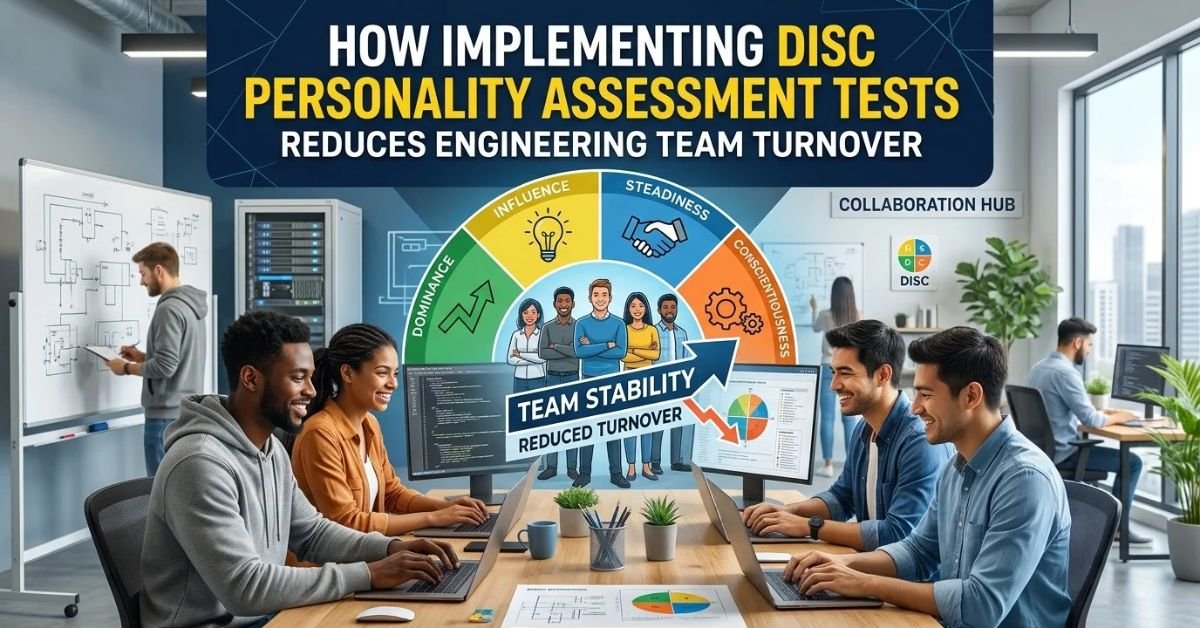
Engineering managers often face the frustrating cycle of hiring talented professionals, only to watch them depart within a year or two. High turnover disrupts project continuity, increases recruitment costs, and can stall innovation. Many leaders try to address this by improving compensation or offering flexible schedules, yet the root causes of dissatisfaction often go deeper. Personality clashes, mismatched roles, and communication breakdowns are frequent contributors to turnover in technical teams. Using a structured approach to understanding individual behavior patterns can help managers address these deeper issues and keep valuable engineers engaged and motivated.
DISC Personality Assessment Tests for engineering teams provide a practical tool for identifying and addressing the underlying interpersonal dynamics that drive attrition. This approach can help technical leaders recognize not just what their team members can do, but how they work best, where they fit, and what support they need to thrive. By applying these insights to hiring, role assignment, and day-to-day management, organizations can reduce frustration, prevent burnout, and create an environment where engineers want to stay and grow.
Common Causes of Engineering Turnover and Retention Challenges
One recurring reason for engineering turnover is the misalignment between an individual’s preferred work style and the demands of their role. For instance, engineers who prefer independent problem-solving may feel stifled in collaborative-heavy environments, while those who thrive on teamwork may feel isolated in siloed roles. When these mismatches persist, employees become disengaged and seek opportunities elsewhere. The impact of workplace fit on employee retention is widely recognized, particularly in industries where technical skills are in high demand.
Another challenge is the lack of effective communication within engineering teams. Teams composed of individuals with vastly different approaches to sharing information and making decisions often experience misunderstandings, leading to frustration and resentment. Over time, these cultural frictions can pile up, contributing to turnover that might otherwise be avoidable.
Limited opportunities for growth or mismanaged expectations during onboarding can also result in early departures. Engineers who feel their unique skills are overlooked or misunderstood are less likely to invest in the success of the organization. Addressing these core issues requires not just better management practices but targeted insights into each team member’s motivators and stressors.
Decoding Behavioral Styles with DISC Frameworks in Tech
The DISC model groups workplace behavior into four primary types—Dominance, Influence, Steadiness, and Conscientiousness—each with its own approach to problem-solving and collaboration. Applying these frameworks to technical teams allows managers to move beyond surface-level assessments and understand how each engineer is likely to react under pressure, prefer to communicate, and approach challenges. For example, an engineer with a high Conscientiousness score may excel in roles requiring precision and adherence to standards, while a high Dominance type may be better suited to rapid prototyping or product leadership.
DISC Personality Assessment Tests for engineering teams make it possible to visualize the behavioral makeup of a team as a whole. This broader perspective helps identify potential sources of friction, such as a dominance of one style or gaps that might lead to overlooked perspectives. Understanding these group dynamics enables managers to proactively mediate conflicts and foster inclusivity.
Tools based on the DISC framework are particularly useful during team restructuring or project kickoffs. By mapping out the behavioral tendencies of team members, leaders can assign roles and responsibilities with a higher degree of confidence, minimizing the risk of personality-based turnover. Insights from behavioral assessment frameworks in team management support more nuanced leadership decisions.
Aligning Engineering Roles with Natural Behavioral Tendencies
Engineering roles often demand a precise mix of technical skill and interpersonal aptitude. When hiring or promoting within a team, leaders who consider the results from DISC Personality Assessment Tests can better match individuals to tasks that fit their strengths. For example, assigning a high-Influence engineer to client-facing technical support or a high-Steadiness individual to long-term maintenance projects makes the most of innate tendencies and keeps motivation high. This approach helps technical managers prevent the mismatch that leads to job dissatisfaction and turnover.
In a practical setting, these insights allow for targeted professional development. An engineer whose profile indicates discomfort with rapid change can be gradually introduced to agile environments through mentorship, rather than being thrust into unfamiliar workflows. Such tailored career paths foster loyalty, because employees feel seen and supported rather than forced to adapt to unsuitable roles.
When role alignment becomes a routine part of management, engineering teams benefit from reduced friction and higher morale. Employees who feel their natural talents are recognized and utilized are more likely to stay and contribute to long-term organizational success.
Building Communication Strategies to Retain Technical Talent
Miscommunication is a leading driver of workplace frustration in engineering environments. The DISC framework helps managers craft communication strategies that resonate with different behavioral styles. For instance, a team member who values directness will appreciate concise updates, while another who prefers a collaborative approach might benefit from open-ended discussions. Adapting communication methods to suit the audience reduces misunderstandings and builds trust within the team.
Regular team check-ins, informed by DISC profiles, can surface concerns before they escalate. By understanding whether a team member responds best to written instructions or verbal feedback, managers make it easier for engineers to voice issues and suggest improvements. This proactive approach to feedback encourages open dialogue and prevents small grievances from turning into reasons for resignation.
Building communication plans around behavioral insights is not a one-time effort. Successful engineering leaders revisit and adjust these strategies as teams evolve, maintaining engagement and lowering the risk of turnover as new projects and challenges arise.
Conclusion
Start by integrating a behavioral assessment into your next team planning session. Reviewing each engineer’s profile before making role assignments or launching new initiatives helps align strengths with responsibilities and opens the door to more effective communication. A data-driven approach to understanding and managing personalities can transform retention outcomes for engineering teams.